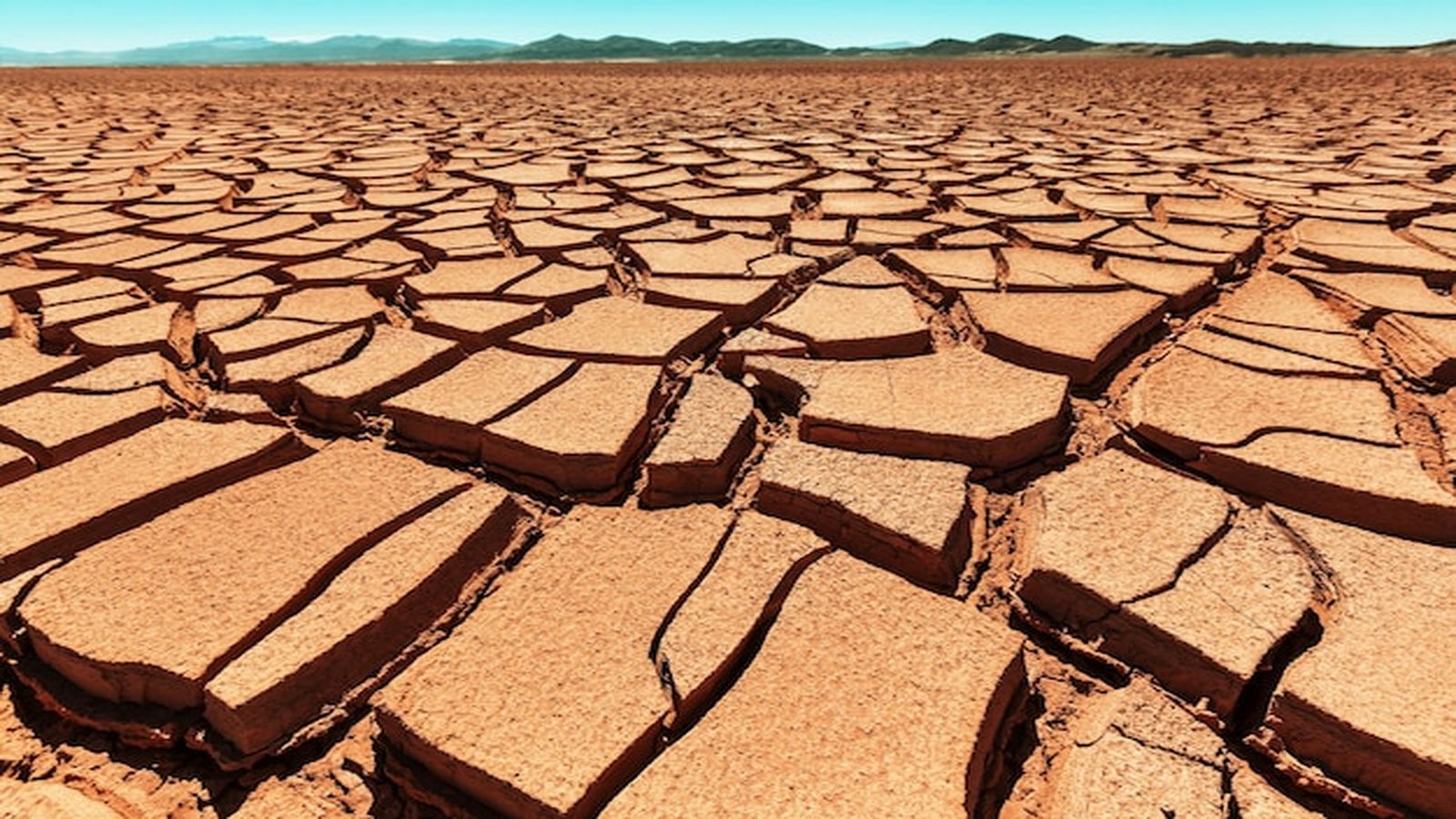
Combating soil salinity and nutrient deficiencies: why improved fertilizers like KNO₃ are in demand
Rising soil salinity affects over 1 billion hectares globally, and potassium nitrate's unique salt-index advantage and nitrate-form nitrogen make it a critical tool for maintaining productivity on affected land.
Salinity: agriculture's growing silent crisis
Soil salinity is not a new problem, but its scale is accelerating. The FAO's 2025 Global Soil Salinity Assessment estimates that salinization affects over 1 billion hectares of agricultural land worldwide, with an additional 2-3 million hectares degraded annually. Irrigation-dependent regions, from California's Central Valley to Australia's Murray-Darling Basin to the Indo-Gangetic Plain, are most heavily affected.
The connection to fertilizer choice is direct. Every fertilizer application adds salts to the soil solution. The salt index of a fertilizer measures how much it increases osmotic pressure relative to an equivalent weight of sodium nitrate. High salt-index inputs compound salinity problems on vulnerable soils. Low salt-index inputs like KNO₃ deliver essential nutrients with minimal additional salt burden.
This article explains the fertilizer-salinity interaction, why KNO₃ outperforms most alternatives on saline soils, and what management strategies work best.
How salinity damages crops
Salinity affects plants through three mechanisms:
- Osmotic stress: High salt concentrations in the soil solution make it harder for roots to extract water, even when the soil is physically moist. The plant effectively experiences drought despite adequate irrigation
- Ion toxicity: Excessive sodium (Na⁺) and chloride (Cl⁻) accumulate in leaf tissues, disrupting enzyme function and damaging cell membranes
- Nutrient imbalance: High Na⁺ competes with K⁺ for root uptake, inducing potassium deficiency even when soil K levels appear adequate. High Cl⁻ interferes with nitrate (NO₃⁻) uptake
The third mechanism is particularly relevant for fertilizer selection. On saline soils, maintaining adequate potassium and nitrogen nutrition is harder because the salt environment suppresses uptake of both nutrients. Choosing a fertilizer that delivers K and N efficiently under salt stress is not a luxury; it is a necessity.
Why KNO₃ works on saline soils
Low salt index
KNO₃ has a salt index of 73.6 per unit of plant nutrient, which is lower than most comparable nitrogen and potassium sources:
| Fertilizer | Salt Index (per unit nutrient) |
|---|---|
| Sodium nitrate | 100.0 (reference) |
| Ammonium nitrate | 104.7 |
| Urea | 75.4 |
| Potassium chloride | 116.3 |
| Potassium nitrate | 73.6 |
| Potassium sulphate | 46.1 |
KNO₃'s salt index is dramatically lower than MOP (116.3), which means applying the same amount of potassium through KNO₃ adds far less osmotic stress to the root zone.
Chloride-free potassium
On saline soils, chloride accumulation is often the primary toxic ion. KNO₃ delivers potassium without adding chloride, preventing further Cl⁻ buildup. This is why virtually all salinity management guidelines recommend against MOP on affected soils.
For a detailed look at chloride sensitivity across crop types, see our dedicated guide.
Nitrate-form nitrogen advantage
Under salt stress, plant uptake of ammonium (NH₄⁺) is more severely suppressed than uptake of nitrate (NO₃⁻). This is because NH₄⁺ and Na⁺ compete for the same cation transport pathways, while NO₃⁻ uses a separate anion transport system. KNO₃ delivers nitrogen in the nitrate form, which maintains N uptake efficiency even when soil sodium levels are elevated.
Additionally, nitrate uptake by roots releases bicarbonate into the rhizosphere, which helps buffer soil pH and can slightly improve calcium availability in saline-alkaline conditions.
For the full comparison of nitrogen forms, see our nitrate vs. ammonium guide.
Field evidence
Israeli vegetable production
Israel's Negev region has some of the world's most challenging irrigation water quality. Growers there have used KNO₃ fertigation for decades as the standard K+N source. Haifa Group trials comparing KNO₃ with MOP+urea on saline-irrigated peppers found:
- 24% higher marketable yield with KNO₃
- 40% lower leaf chloride concentrations
- Significantly less blossom-end rot (a calcium-related disorder exacerbated by Na/K imbalance)
Australian grapevines
Salinity-affected vineyards in South Australia's Barossa Valley showed that replacing MOP with KNO₃ for potassium fertigation:
- Reduced vine salt stress symptoms by two severity classes on a standardized scale
- Improved berry potassium concentrations and wine quality scores
- Allowed vines to maintain productivity on water with EC up to 2.5 dS/m
Indian rice-wheat systems
In the Indo-Gangetic Plain, where rising water tables bring salts to the surface, IARI trials found that substituting one-third of the standard urea+MOP program with KNO₃ increased rice yield by 11% and wheat yield by 8% on soils with EC above 4 dS/m.
Integrated salinity management
KNO₃ alone does not solve salinity problems, but it is a critical component of an integrated approach:
- Monitor soil and water EC regularly: Know your baseline and track trends
- Choose low salt-index fertilizers: KNO₃ for K+N; calcium nitrate for Ca+N; SOP where additional sulphur is needed
- Manage irrigation: Leaching fractions, drainage and water source blending are the primary tools for controlling salt accumulation
- Build soil organic matter: Organic matter improves soil structure and water-holding capacity, buffering against salt stress
- Select salt-tolerant varieties: Breeding programs are developing crop varieties with improved salt tolerance, but even tolerant varieties perform better with salt-conscious fertilizer management
For broader guidance on nutrient management principles, visit our plant nutrition hub. For specific application recommendations, see our recommendations page.
The demand outlook
Growing salinity pressure is one of the structural demand drivers for KNO₃. As irrigated agriculture expands in semi-arid regions and climate change intensifies drought-salinity cycles, the premium that growers place on salt-safe fertilizer inputs will increase.
The World Bank estimates that salinity-induced crop losses already exceed $27 billion annually. For the potassium nitrate industry, this represents a growing addressable market where KNO₃'s unique combination of low salt index, chloride-free potassium and nitrate nitrogen cannot be replicated by cheaper alternatives.
FAQ
At what soil EC level should I switch from MOP to KNO₃? Most extension guidelines recommend considering the switch when soil EC exceeds 2 dS/m or irrigation water EC exceeds 1 dS/m. On chloride-sensitive crops, the threshold is lower.
Can I use KNO₃ to remediate already-saline soils? KNO₃ does not remediate salinity directly; it prevents further salt contribution from fertilizer inputs. Remediation requires leaching, drainage improvements or gypsum application to displace sodium.
Is the cost premium of KNO₃ over MOP justified on saline soils? Almost always. The yield and quality losses from MOP-induced chloride accumulation on saline soils typically far exceed the fertilizer price difference. Several economic analyses show positive ROI from the switch at soil EC levels above 2.5 dS/m.
Last updated: May 11, 2026
Related articles
Emerging ammonium-nitrate feedstocks: the fastest-growing raw material for potassium-nitrate fertilizers
New ammonia and nitric acid feedstock sources, from green hydrogen to captured CO₂ to waste-derived nitrogen, are reshaping the cost and sustainability profile of potassium nitrate production.
Read morePotassium chloride vs. potassium nitrate: raw-material trends and cost drivers in 2026
A practical comparison of KCl and KNO₃ as potassium sources, covering production costs, supply dynamics, agronomic trade-offs and the raw-material trends shaping pricing in 2026.
Read moreHaifa's FertiMatch system: AI-powered guidance for optimal potassium-nitrate application
Haifa Group's FertiMatch platform uses crop models and AI to generate tailored KNO₃ fertigation programs, showing strong results in commercial greenhouse and orchard operations.
Read more