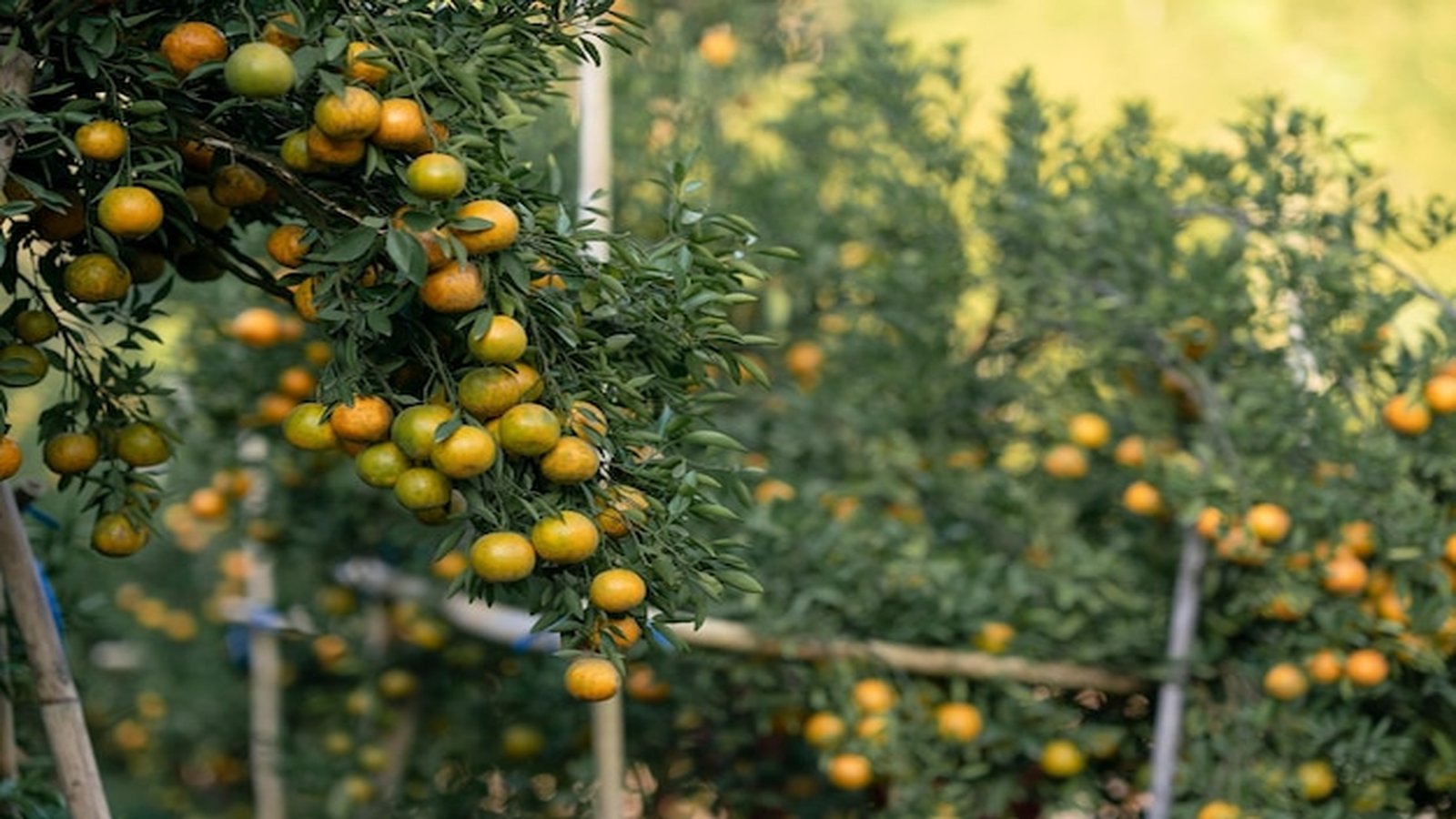
Low-chloride potassium nitrate: protecting fruit, vegetable and tobacco crops in 2026
For chloride-sensitive crops like citrus, berries, lettuce and tobacco, low-chloride KNO₃ remains the safest potassium source, and 2026 brings improved formulations and broader availability.
Why chloride matters more than most growers think
Chloride is an essential micronutrient. Plants need small amounts for photosynthesis and osmotic regulation. But the gap between "enough" and "too much" is narrow for many economically important crops, and the consequences of excess chloride are serious: leaf burn, reduced fruit quality, impaired root function and, in severe cases, outright crop failure.
The problem is that the most widely used potassium fertilizer, potassium chloride (MOP), delivers 47% chloride by weight. For every kilogram of potassium applied as MOP, you are also applying roughly 0.9 kg of chloride. On crops with low chloride tolerance, that addition can cause measurable damage even at moderate potassium application rates.
Potassium nitrate (KNO₃) contains less than 1.5% chloride in standard grades and less than 0.5% in premium grades. It delivers potassium with virtually no chloride burden, making it the default K source for sensitive crops. This article reviews which crops are most at risk, what the latest research says about chloride thresholds, and how improved KNO₃ formulations are making crop protection even more reliable in 2026.
Crops with the highest chloride sensitivity
Citrus
Citrus is the textbook chloride-sensitive crop. Rootstocks vary in their chloride exclusion ability, but most accumulate chloride in leaves when soil chloride levels exceed 350-500 mg/L in the irrigation water or soil solution. Symptoms include leaf tip burn, premature leaf drop and reduced fruit size.
California and Mediterranean citrus operations have largely switched to KNO₃ or SOP for potassium supply. The shift has been driven by both research evidence and grower experience: orchards that switched from MOP to KNO₃ typically show measurable improvements in leaf health and fruit quality within one to two seasons.
Berries
Strawberries, blueberries and raspberries are highly sensitive to chloride. Blueberries are particularly vulnerable because they grow best in acidic soils where chloride mobility is high. KNO₃ delivered through fertigation is the standard K source for commercial berry production in most regions.
Lettuce and leafy greens
Excess chloride reduces leaf quality in lettuce, spinach and other greens. Because these crops are harvested for their foliage, any chloride-induced leaf damage directly affects marketability. Hydroponic and greenhouse lettuce operations universally use KNO₃ as the potassium source in nutrient solutions.
Tobacco
Tobacco is one of the most chloride-sensitive commercial crops. Chloride levels above 0.5% in cured leaf reduce combustibility (the leaf does not burn cleanly), which is a critical quality parameter. Tobacco-producing regions in the US, Brazil, Zimbabwe and Indonesia mandate chloride-free potassium sources, making KNO₃ and SOP the only viable options.
Tree nuts
Almonds, pistachios and walnuts show varying degrees of chloride sensitivity depending on rootstock. In California's Central Valley, where saline irrigation water compounds the problem, KNO₃ use in tree nut production has increased significantly over the past decade.
For a comprehensive list of crops and their chloride tolerance levels, see our chloride sensitivity guide.
Latest research on chloride thresholds
A 2025 meta-analysis published in Plant and Soil reviewed 142 field trials across 28 crop species and established updated chloride threshold guidelines:
| Sensitivity Class | Soil Cl⁻ Threshold (mg/L) | Example Crops |
|---|---|---|
| Very sensitive | < 300 | Tobacco, berries, avocado |
| Sensitive | 300-600 | Citrus, stone fruit, lettuce, beans |
| Moderately tolerant | 600-1,200 | Tomato, potato, grape, maize |
| Tolerant | > 1,200 | Cotton, barley, sugar beet |
The analysis confirmed that even "moderately tolerant" crops show measurable yield and quality reductions when chloride inputs push soil levels above the threshold for extended periods. This is particularly relevant in irrigated systems where chloride accumulates season over season.
Improved KNO₃ formulations for 2026
Several developments are making low-chloride KNO₃ even more effective for sensitive crops:
Ultra-low-chloride grades
Manufacturers including SQM and Haifa now offer KNO₃ grades with guaranteed chloride content below 0.2%, compared with the standard 1.0-1.5% specification. These ultra-pure products command a modest premium but are justified for the most sensitive applications (tobacco, hydroponic lettuce, premium berry production).
Chloride-free micronutrient-enriched KNO₃
New formulations combine ultra-low-chloride KNO₃ with chelated micronutrients (Zn, B, Fe) without introducing chloride through the micronutrient salts. This is achieved by using sulphate- or chelate-based micronutrient forms rather than chloride salts.
Liquid KNO₃ solutions
Pre-dissolved liquid KNO₃ products are gaining traction in fertigation markets. These eliminate the risk of undissolved particles carrying chloride-containing impurities and ensure perfectly homogeneous nutrient delivery.
Practical management for chloride-sensitive systems
- Know your water: Test irrigation water for chloride. In some regions, water chloride alone exceeds the crop's tolerance before any fertilizer is applied
- Choose your K source carefully: Use KNO₃ or SOP for all potassium inputs on sensitive crops. Even small MOP applications can push chloride levels over the threshold
- Manage leaching: Where chloride has accumulated from past MOP use or saline water, deliberate leaching irrigations can reduce soil chloride levels over time
- Monitor tissue Cl⁻: Leaf tissue chloride analysis is the most reliable indicator of crop chloride status. Critical values vary by crop; consult local extension guidelines
- Consider the nitrate advantage: Beyond chloride avoidance, the nitrate nitrogen in KNO₃ supports better nutrient uptake in saline conditions because nitrate uptake is less affected by salt stress than ammonium uptake. See our nitrate vs. ammonium comparison for details
Economic justification
The price difference between MOP and KNO₃ is significant on a per-tonne basis, but the comparison is misleading for chloride-sensitive crops:
- KNO₃ supplies both K and N, so the effective K cost after crediting the N component is much lower than the raw price suggests
- Chloride damage reduces marketable yield and quality, often costing far more than the fertilizer price difference
- Premium markets for high-quality fruit, vegetables and tobacco reward the quality improvements that chloride-free nutrition delivers
For growers of sensitive crops, KNO₃ is not the expensive option. MOP-induced chloride damage is the expensive outcome.
FAQ
Can I use MOP on chloride-sensitive crops if I keep rates low? It depends on your soil type, irrigation water quality and cumulative chloride load. On sandy soils with low background chloride, modest MOP rates may be tolerable. But on heavier soils or where water contributes chloride, even low MOP rates can push levels above the threshold. KNO₃ eliminates the risk.
Is SOP (potassium sulphate) equivalent to KNO₃ for chloride avoidance? SOP is also chloride-free and suitable for sensitive crops. The choice between SOP and KNO₃ often comes down to whether the crop also needs sulphur (favoring SOP) or nitrogen (favoring KNO₃), and whether solubility matters for the application method.
Does organic certification affect KNO₃ use on sensitive crops? Standard KNO₃ is not approved for organic production. Organic growers of chloride-sensitive crops typically use SOP, langbeinite or other naturally derived potassium sources. Check with your certifier for approved options.
Last updated: May 8, 2026
Related articles
Emerging ammonium-nitrate feedstocks: the fastest-growing raw material for potassium-nitrate fertilizers
New ammonia and nitric acid feedstock sources, from green hydrogen to captured CO₂ to waste-derived nitrogen, are reshaping the cost and sustainability profile of potassium nitrate production.
Read morePotassium chloride vs. potassium nitrate: raw-material trends and cost drivers in 2026
A practical comparison of KCl and KNO₃ as potassium sources, covering production costs, supply dynamics, agronomic trade-offs and the raw-material trends shaping pricing in 2026.
Read moreHaifa's FertiMatch system: AI-powered guidance for optimal potassium-nitrate application
Haifa Group's FertiMatch platform uses crop models and AI to generate tailored KNO₃ fertigation programs, showing strong results in commercial greenhouse and orchard operations.
Read more